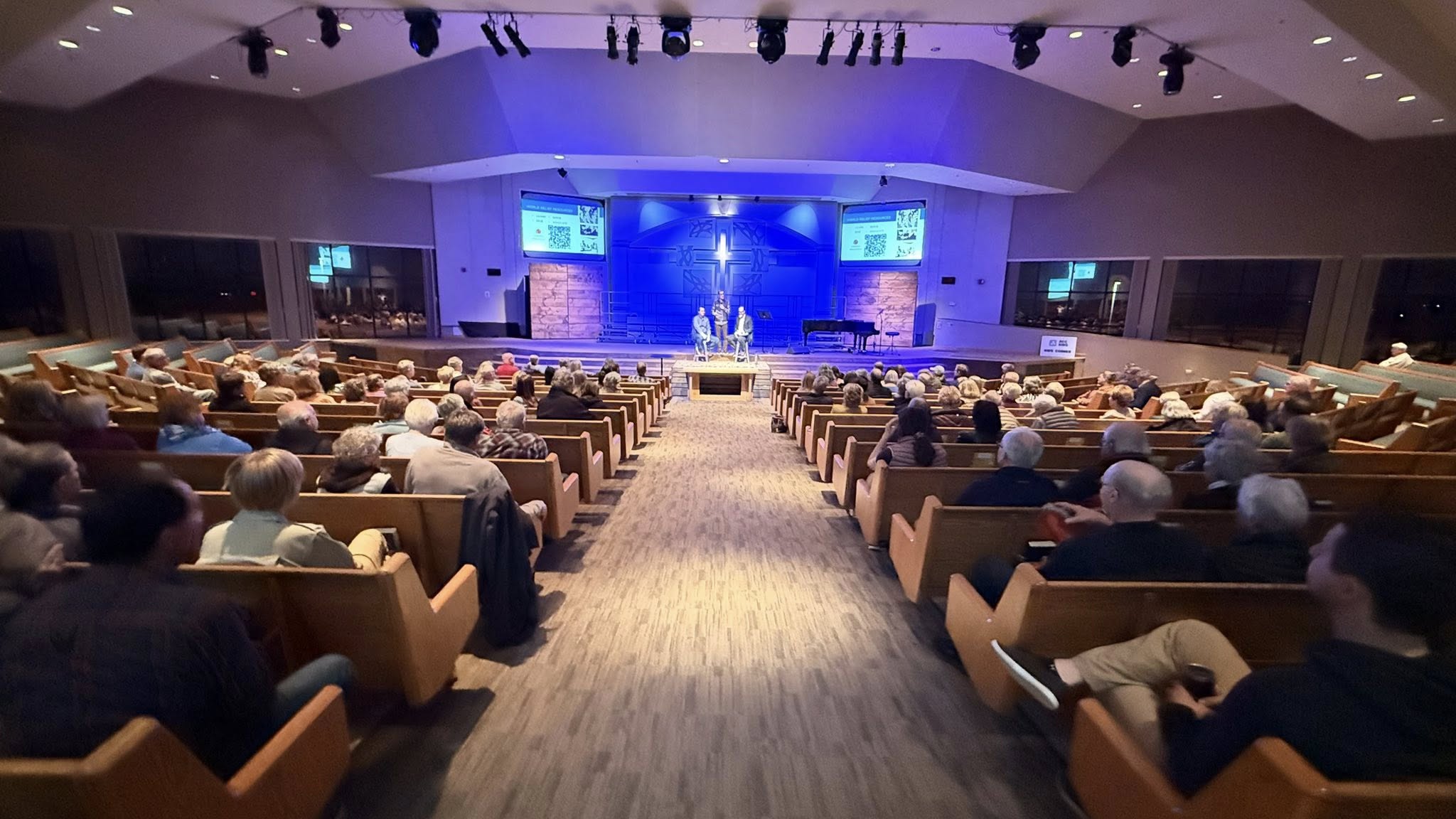
During the April 2026 Annual Ministry Celebration, we reflected on 140 years of ministry in the Midwest Conference of the Evangelical Covenant Church (ECC) — a diverse family of churches across Kansas, Missouri, Iowa, Nebraska, and Colorado, deeply committed to Jesus Christ and passionately engaged in God’s mission in the world.
What began in the late 1800s with Swedish Mission Friends gathering for worship, prayer, Scripture study, and mutual encouragement has grown into a network of congregations representing many cultures, languages, worship styles, and ministry expressions. While our communities may look different from one another, we remain connected by a shared commitment to follow Jesus together.
As part of this celebration, we looked back across four major eras in the history of our churches. We’re excited to share these era videos with you as we remember the past, celebrate the present, and look ahead with hope toward the future God is still unfolding among us.
Immigrant Era (1871-1906)
The first MWC Churches were formed shortly after Abraham Lincoln was assassinated. Historians refer to these years following the Civil War as the “Gilded Age,” a time marked by rapid industrialization, income inequality, and political corruption.
The transcontinental railroad had just been completed, opening the American West to increasing numbers of new residents. Churches in this era formed as Swedish immigrants settled in communities like Omaha, Garfield Center, Moses Hill, Des Moines, and Oakland. Swedish Mission Friends collaborated to educate their young, to serve the vulnerable in their communities, and study the scriptures together.
The Immigrant Era was a time of new technology. Bicycles were surging in popularity. The typewriter, handheld cameras, and safety pins were all new. The Chicago world’s fair in 1893 featured electric lights … an invention that would change the way we lived.
But not everything was easy during the Immigrant Era. The nation continued wrestling with inequality, economic hardship, and questions of justice and opportunity. An economic downturn in the 1890s left many families struggling.
In the midst of all this, Mission Friends gathered to worship, study the Bible, and establish communities of Jesus (in the Swedish language at first).
Cold War Era (1947-1989)
15 of our MWC churches were formed during the Cold War Era. For those of you who are baby boomers, this is your era!
In the years following WWII, sprawling suburban communities began to emerge to house growing families. We remember the 1950’s with nostalgia … soda fountains … hula hoops … cars with big fins. In post-war America, the culture and church seemed to be aligned. President Eisenhower even added that we were one nation “under God” to our pledge of allegiance in order to distinguish religious America from secular communist countries.
A new style of music was emerging, raising concerns with both parents and churches. As the baby boom generation was coming of age, many were using their voices to protest for a more peaceful world. And while the space race of the 1960’s was inspiring, the nuclear arms race was frightening. In a time of rapid cultural change, both political and religious leaders appealed to fear as well as conviction when responding to perceived threats.
The Cold War Era was marked by trauma: The assassination of President Kennedy. Escalating losses in Vietnam. The killing of Martin Luther King Jr. for his work that led to the Civil Rights Act.
But there were bright spots during the Cold War: 1970’s music was awesome (except for disco, ha!). And in spite of some questionable fashion trends (e.g. shoulder pads), the 1980’s saw the first female appointed to the U.S. Supreme Court.
And as the Cold War Era came to a close, evangelicals were riding high. It was a hopeful time as boomers, with children in tow, were returning to church.
“Culture War” Era (1990-2019)
38% of our MWC churches began (or were adopted) between 1990-2019. In the Covenant Church, this was a season of recommitment to the Great Commission … a time when leaders rallied congregations to start new churches and developed systems to identify church planting pastors who could help reach new populations and new generations with the gospel.
With the rise of the internet and the growing versatility of cell phones, this digital age saw an increase in global connectivity and information access, accompanied by the disappearance of cultural staples like card catalogs, pay phones, and traditional shopping malls.
In America, evangelicalism reached a high point in 1993. However, in the years that followed, this trend shifted. During this “Culture War” Era, as polarization drew people toward ideological corners, overall religious affiliation began a sustained decline. There was a significant rise in those who identified as “nones.”
Yet in the midst of cultural change, Christ builds His church. For those of us who survived Y2K, the 21st century has brought wonderful new sisters and brothers into the MWC family – including black, white, and brown congregations from diverse cultural backgrounds. In fact, over 40% of MWC congregations started in this era are churches of color. God’s mission remains the same, and we are better together.
And our leaders look different than they did in 1990. With the call of our first female superintendent in 2011, many of us became much more attentive to the calling and gifting of female leaders. Today, the MWC is blessed with incredibly gifted women and men serving together in all levels of leadership.
Post-Pandemic Era (2020-2026)
As we conclude our walk through 140 years of MWC ministry, we find ourselves in an interesting moment … this “post-pandemic” era. Many of our congregations look very different today than they did a decade ago.
In churches, there’s been a lot of “sorting” over the past six years. People left churches … and people joined new churches … and some people opted out altogether.
Here’s what what we see evidence of: many seekers today are looking for people who have been with Jesus. They’re looking for communities that reflect the very counter-cultural Kingdom of God.
As we reflect on the history of our churches, every one of these congregations was started in a broken world … a world filled with pain … a world full of injustice. Jesus came into our world as light … then called us the light. You are the light of the world … let your light shine before others, that they may see your good deeds and glorify your Father in heaven.
This world/culture has never been “home” to God’s people. The New Testament reminds us we are exiles, aliens and strangers, citizens of heaven. That’s true no matter what ethnicity we are, no matter our socioeconomic status, no matter what country is on our passport.
Jesus’ call to go and make disciples is our primary call today. We are on the front edge of yet another era of ministry as the MWC family.